Google relaunched Bard as the Gemini assistant
Google Gemini is the AI-powered chatbot that Google launched in February 2024 by renaming and rebranding its earlier Bard assistant. The rebrand paired a revamped interface with the integration of Google's Gemini family of multimodal large language models, replacing the PaLM 2 model that had powered Bard.
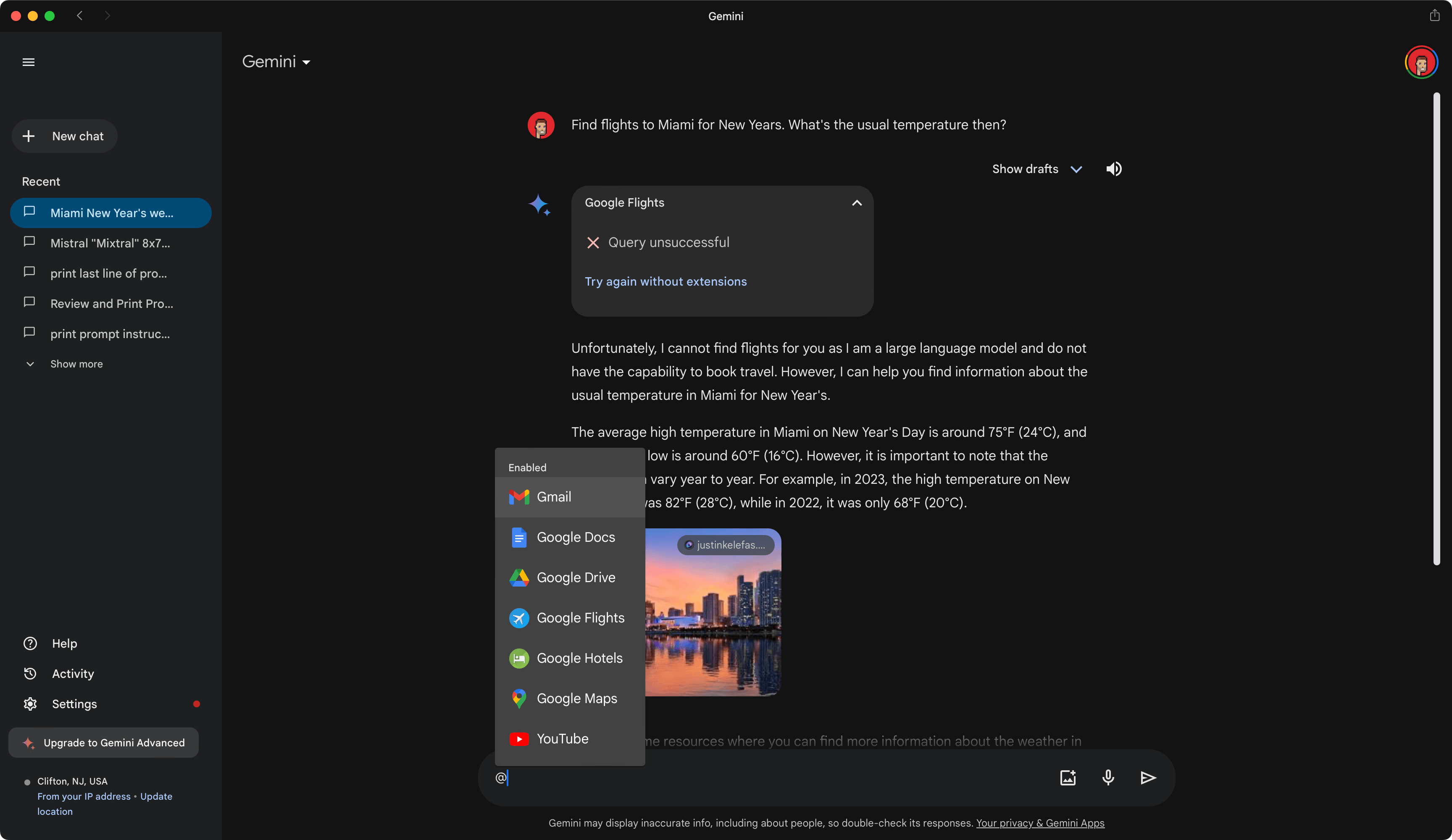
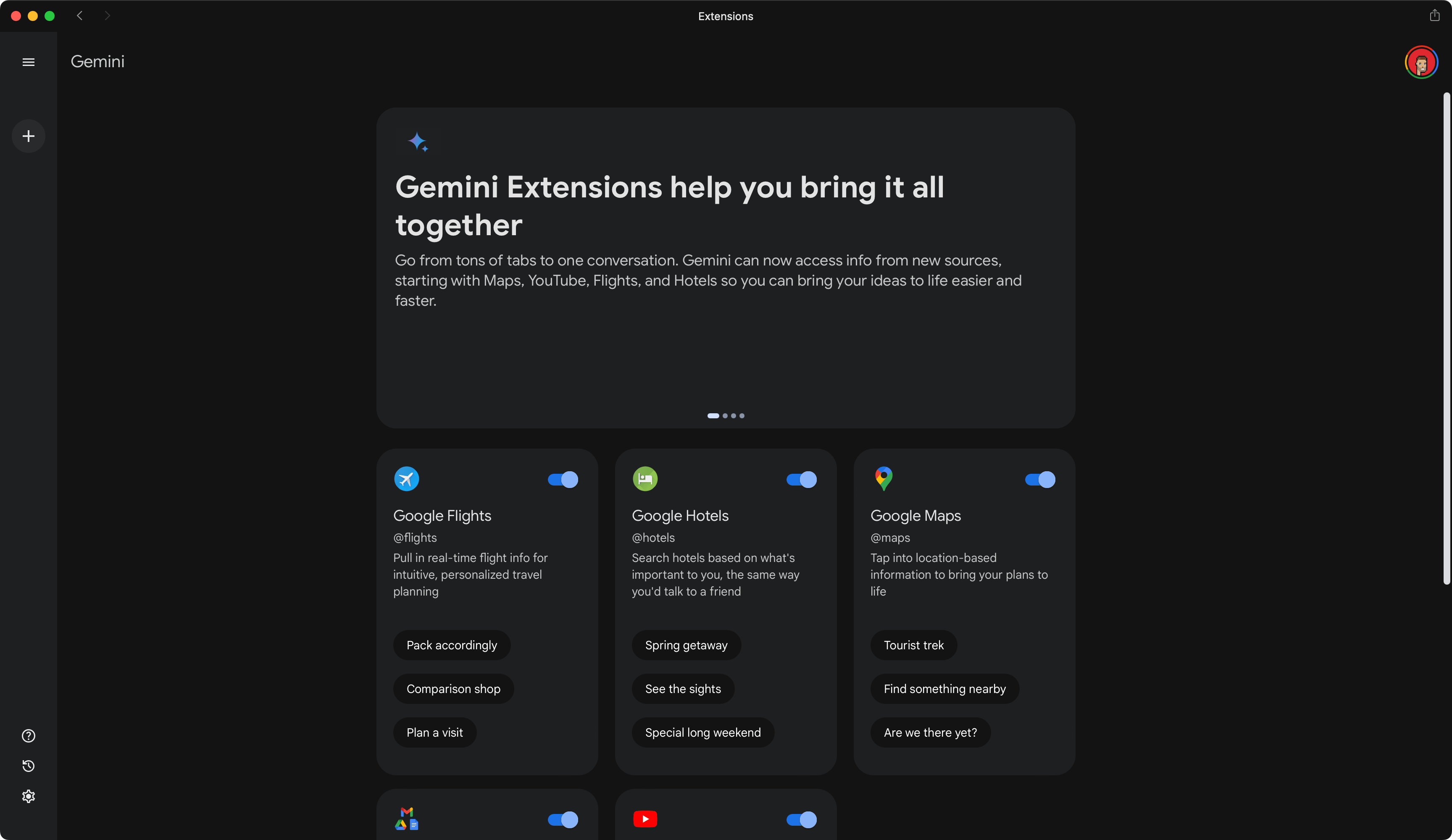
At launch, Gemini introduced a new chat experience and an "Ultra 1.0" tier, plus integration with Google services like Gmail, Maps, and YouTube, and support for text, voice, and image interactions on Android and iOS.
Gemini initially launched in English in the U.S., then expanded to Japanese, Korean, and English in most other markets, with the UK, Switzerland, and the European Economic Area following later due to regulatory review. Canada gained access on February 8, 2024.
Gemini and its underlying models have since been integrated across Google's product lineup, including Search and Workspace apps. Developers and enterprise customers can access the Gemini API through Google AI Studio and Vertex AI to prototype and ship their own applications.
Gemini Advanced
Gemini Advanced is the paid tier of the assistant, built for more complex tasks such as coding, logical reasoning, and creative collaboration, with longer context and stronger recall of earlier turns in a conversation. It launched bundled with the Google One AI Premium Plan and now ships as part of the Google AI Pro and Google AI Ultra subscriptions, which range from roughly $19.99 to $249.99+ per month depending on the plan and included Google One storage. Pricing and plan names have changed since launch, so check Google's current subscription page for exact tiers.
Gemini Ultra 1.0
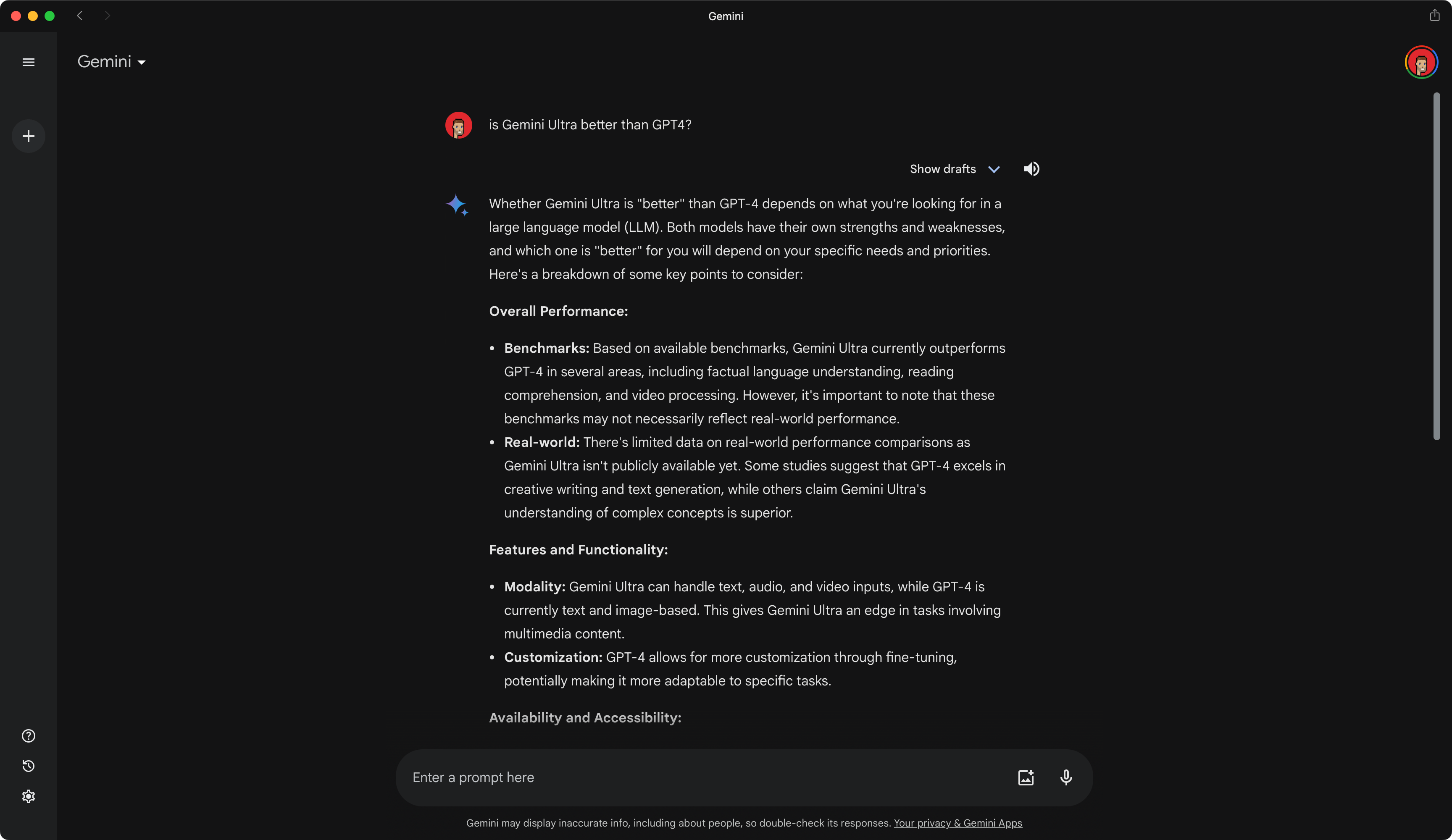
Gemini Ultra 1.0 was the most capable model in the original Gemini family at launch, and the first model Google reported as surpassing human experts on the Massive Multitask Language Understanding (MMLU) benchmark, with a score of 90.0%. Like the rest of the Gemini family, it is multimodal, able to work with text, images, audio, and video.
What changed from Bard to Gemini
Replacing Bard's PaLM 2 foundation with the Gemini models brought several improvements to the assistant:
- Multimodal input — the assistant can now understand and combine text, code, audio, image, and video, rather than working primarily with text as Bard did.
- Stronger reasoning — the Gemini Pro model that now powers the assistant offers more advanced reasoning and planning than Bard's PaLM 2 model, particularly on complex subjects like math and physics.
What is Google Gemini Assistant?
Google Gemini is Google's AI chatbot, using natural language processing and machine learning to hold conversational, ChatGPT-style interactions. It began as Bard, built on Google's LaMDA model, before adopting PaLM 2 at Google I/O 2023 and then the Gemini models at the February 2024 rebrand.
Gemini integrates with websites, messaging apps, and platforms, offering natural language interactions. It features Google Lens integration, enabling image uploads alongside text queries for richer responses.
As Bard, the assistant launched on March 21, 2023, to select users in the U.S. and UK, then expanded to over 180 countries on May 10, 2023. The free tier remains available today, alongside the paid Gemini Advanced/AI Pro/Ultra tiers described above.
Designed to fetch and interpret web information, Gemini aims to demystify complex subjects, spark creativity, and satisfy curiosity. Its emergence has also raised ongoing questions about copyright and job displacement from AI advancements.
Supporting multiple languages and widely available, Gemini seeks to complement, not replace, Google Search by offering a collaborative AI-powered service.
How does Google Gemini compare to other AI assistants?
Google Gemini, OpenAI's ChatGPT, and Microsoft's Bing Chat share similar functionalities but have distinct differences.
Data Source and Information Retrieval
Google Gemini can access current internet data directly, since it's built on Google's search infrastructure. ChatGPT has also added web browsing on top of its training data, narrowing this gap over time.
User Interface and Experience
Gemini boasts a user-friendly interface, excels in research tasks, reads responses aloud, and quickly performs web searches and image retrievals. Its voice, however, sounds robotic, and source reliability may vary. ChatGPT is adept at generating and summarizing text, particularly for long-form content like articles and emails.
Integration and Customization
Gemini's integration is limited to Google apps, offering a more isolated experience. ChatGPT, however, supports extensive dialogue interactions and integrates with various plugins on its mobile app.
Creativity and Text Generation
While Gemini efficiently answers queries with relevant information, ChatGPT outperforms in creativity and text generation, especially for articles and emails.
Speed
Gemini is recognized for its quick response times, outpacing Bing and the free version of GPT-3.5, though not as fast as ChatGPT Plus.
Privacy
Google stores Gemini conversation data for up to 18 months by default, with options to adjust to three or 36 months. These conversations may also be searchable, posing privacy considerations.
User Base
As a May 2023 snapshot (before the Gemini rebrand and the launch of Gemini Advanced), ChatGPT had an estimated 180.5 million users versus 146.6 million for the assistant (then still branded Bard). Both products have grown substantially since.
Ultimately, the choice between Google Gemini and ChatGPT hinges on the user's specific needs and preferences, as each has unique strengths and weaknesses.
How Google's Gemini Assistant Works (and Why It's Different)
Google's Gemini assistant stands out by directly accessing web information, keeping its responses current and dynamic. It runs on Google's Gemini family of models, built on a Transformer neural network architecture and trained on extensive datasets including text, code, images, audio, and video. This foundation enables the assistant to perform advanced reasoning, multilingual translation, and natural language generation.
Unique to the assistant is its seamless integration with Google's ecosystem, such as Gmail, Docs, Drive, Maps, and YouTube, enhancing its utility by providing relevant information across these platforms. Additionally, it supports drafting various content types, from cover letters to emails.
Gemini offers voice interactions, image and video analysis, and multilingual communication, functioning similarly to a voice assistant. Its capability extends to describing visuals, thanks to Google Lens integration.
It serves as a direct interface to Google's Gemini models, augmenting Google Search with its comprehensive capabilities.